Structure & direction
Raised and sunken areas, irregular surfaces and the direction of a scar influence how lines, areas and contrast can work on the body.
Understand the starting point. Lead the eye anew.
Integration or visual covering grows out of scar structure, body shape and movement – developed individually by Kristina Lepa.
PERSONAL · DISCREET · SELF-DETERMINED
A scar can be visible without its story being meant for others. You do not have to explain anything you do not want to explain.
The first conversation is not about why the scar came to be. It is about how you want to live with it today and whether an artistically and technically responsible tattoo can come from that.
Some people want to integrate their scar deliberately into a new image. Others wish it to draw less attention. And some do not yet know in the first conversation which direction feels right. The personal assessment is there for that too.
The decision remains yours. Kristina Lepa explains the creative possibilities and limits. Whether and how a tattoo project comes from that is then your decision.
The creative direction
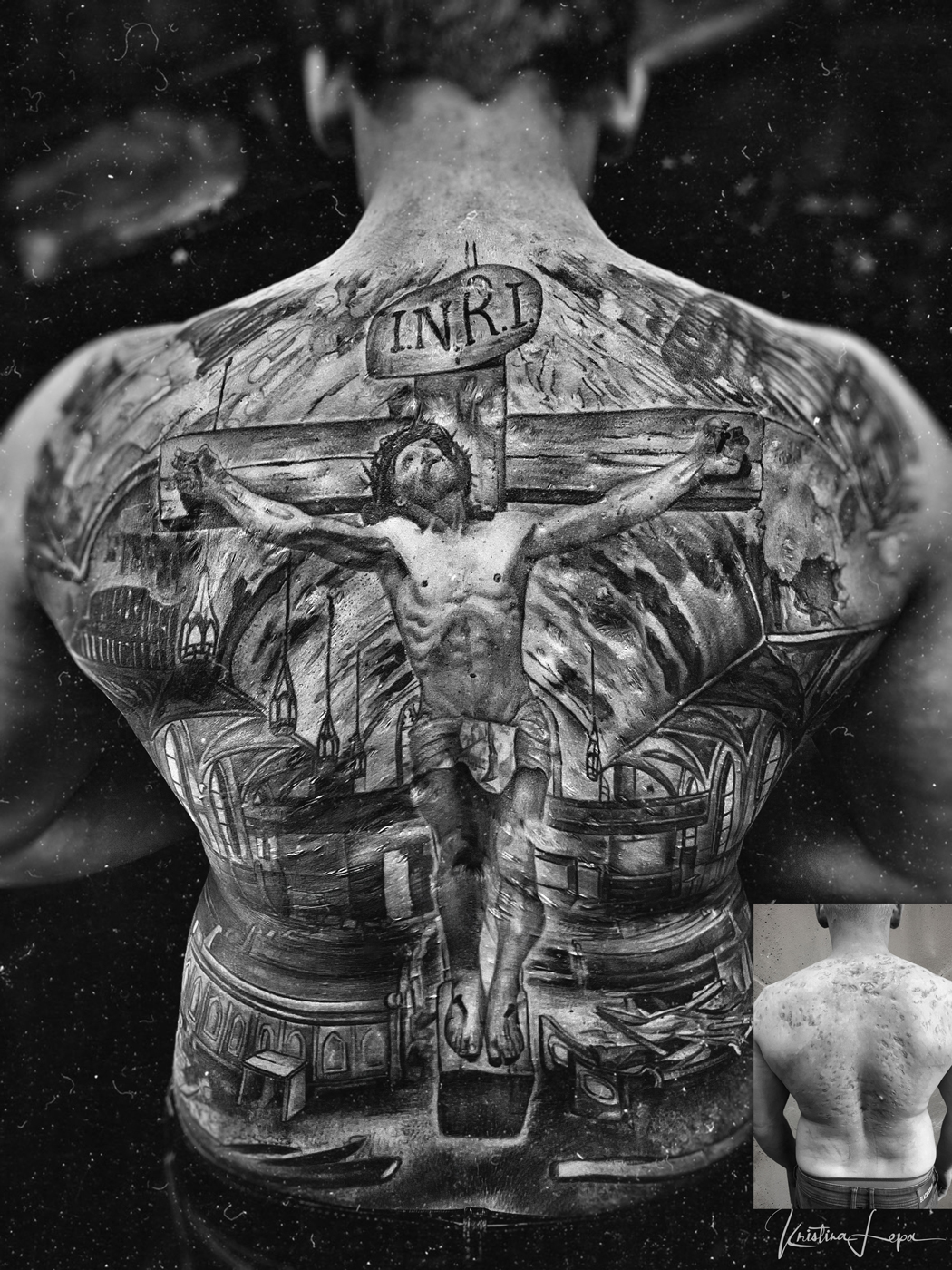
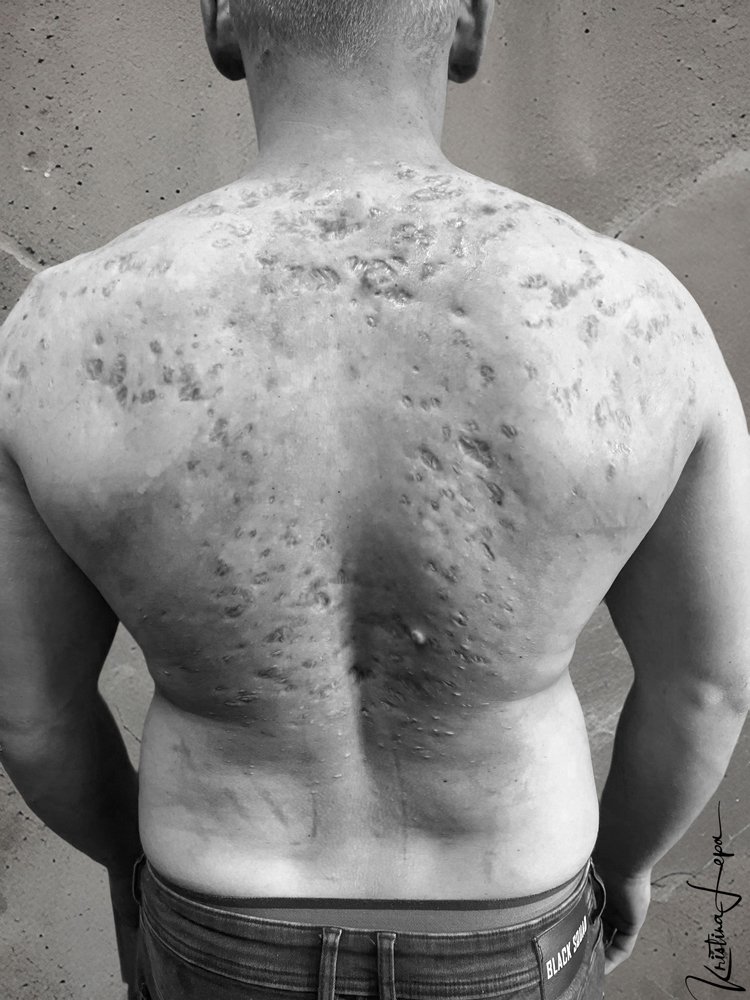
Integration: The scar deliberately becomes part of the image. Lines, areas, movement and contrast take up its structure and lead it into a new, connected overall effect.
Visual covering: The composition reorders the eye and can – depending on the nature of the scar – make it visibly recede.
A tattoo does not change the structure of scar tissue. Raised or sunken areas can remain visible and can still be felt. Which creative direction is viable is therefore assessed in person before any planning.
Kristina Lepa’s portfolio →WHAT KRISTINA LEPA LOOKS AT
Raised and sunken areas, irregular surfaces and the direction of a scar influence how lines, areas and contrast can work on the body.
For tattooing, the skin must be fully healed and stable. An age alone is not enough for this assessment; the individual situation is what counts.
A scar is not looked at in isolation. Body shape, movement and the adjoining open skin determine how far a composition has to be taken so that it works as a whole.
Visual covering is not about making scar tissue disappear. The composition can shift the visual focus and deliberately lead the eye elsewhere.
Not every strong solution has to cover a scar as completely as possible. Sometimes the more convincing work comes when its shape is deliberately taken up and becomes part of the image.
Professionalism also means not taking on a work when the condition of the skin, the starting point or the desired effect do not allow a responsible and artistically convincing solution.
WHY SCAR WORK IS DIFFERENT
With an ordinary tattoo composition the design can largely be developed from body shape and the desired image. With scar work there is a further layer: the existing skin structure is already part of the composition.
That is why a convincing solution cannot be chosen from a catalogue of motifs, nor planned reliably from a photo alone. Kristina Lepa develops the image from the interplay of scar, body, movement, contrast and available space. This can mean that a motif has to be larger, led differently or built in an entirely different way than first imagined.
This is exactly where the specialisation lies: not in placing as much tattoo as possible on a scar, but in developing a composition that works with the real starting point.
For the first contact, what is needed to arrange an appointment is enough. You tell your personal story only if, and as far as, you wish.
The skin and the direction and nature of the scar are looked at in person. Only from that does it become clear which artistic possibilities make sense at all.
On the basis of this assessment Kristina Lepa develops the artistic direction. Only when starting point, composition and scope allow a convincing work is the realisation agreed.
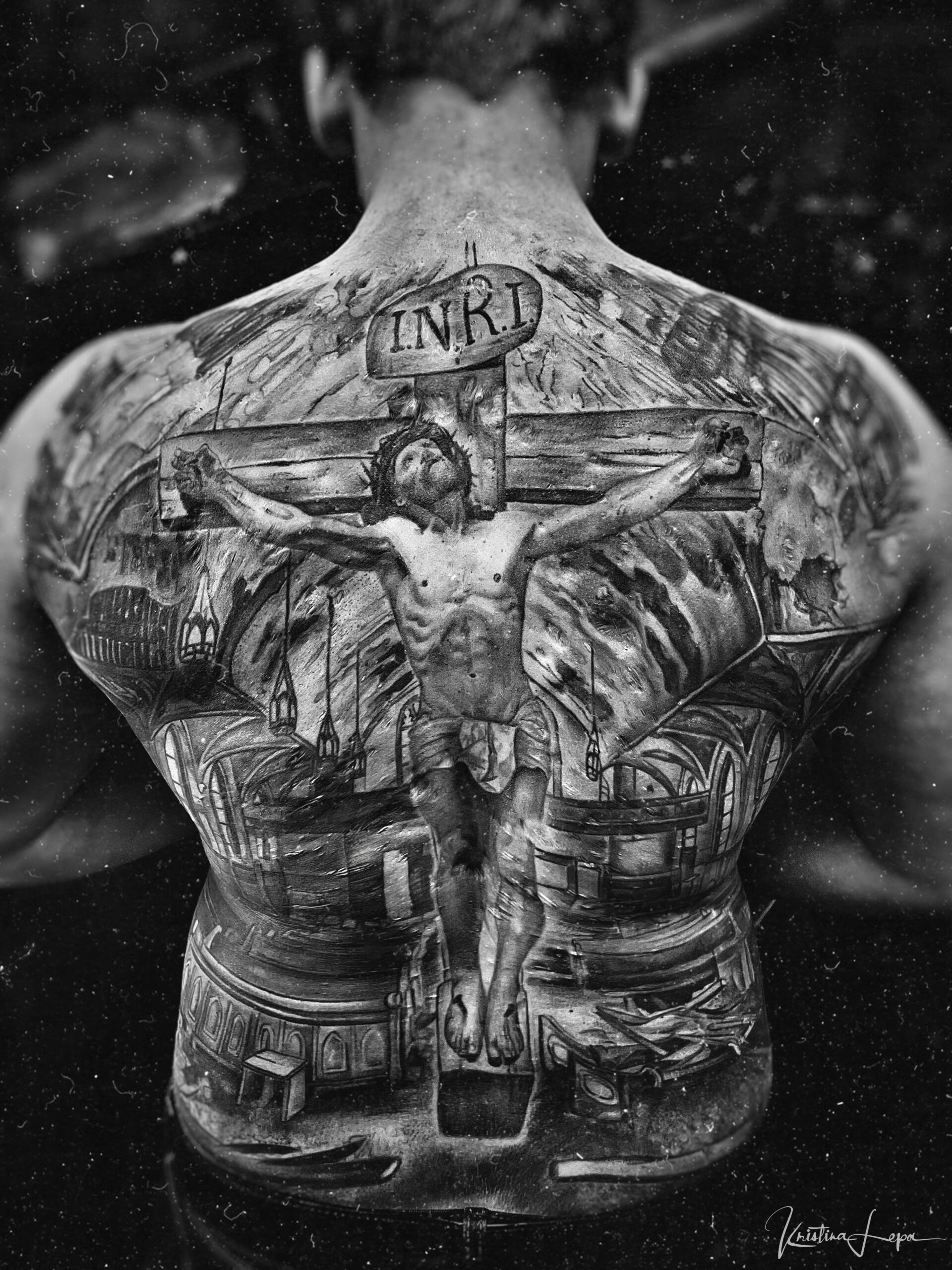
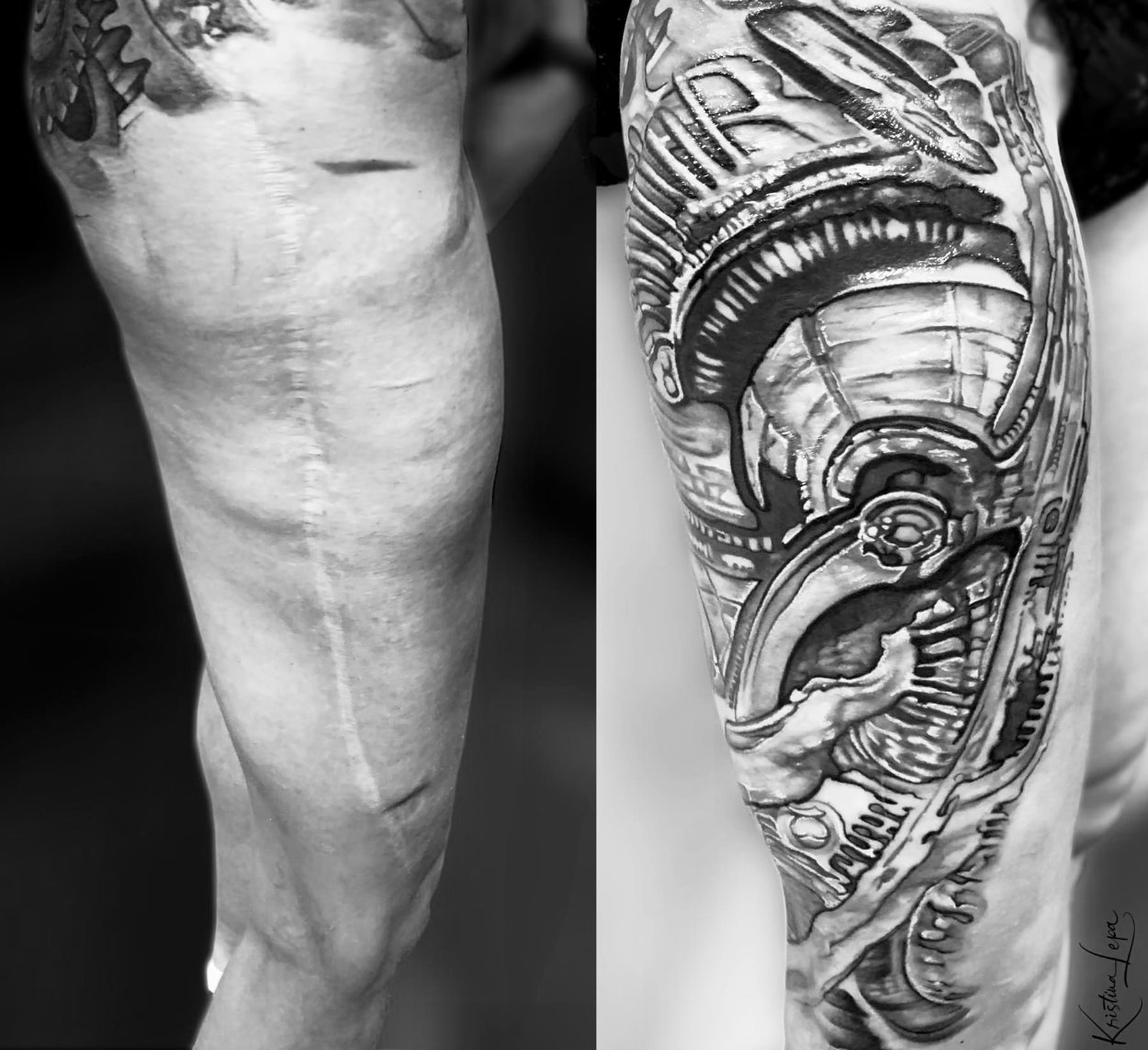
Works by Kristina Lepa
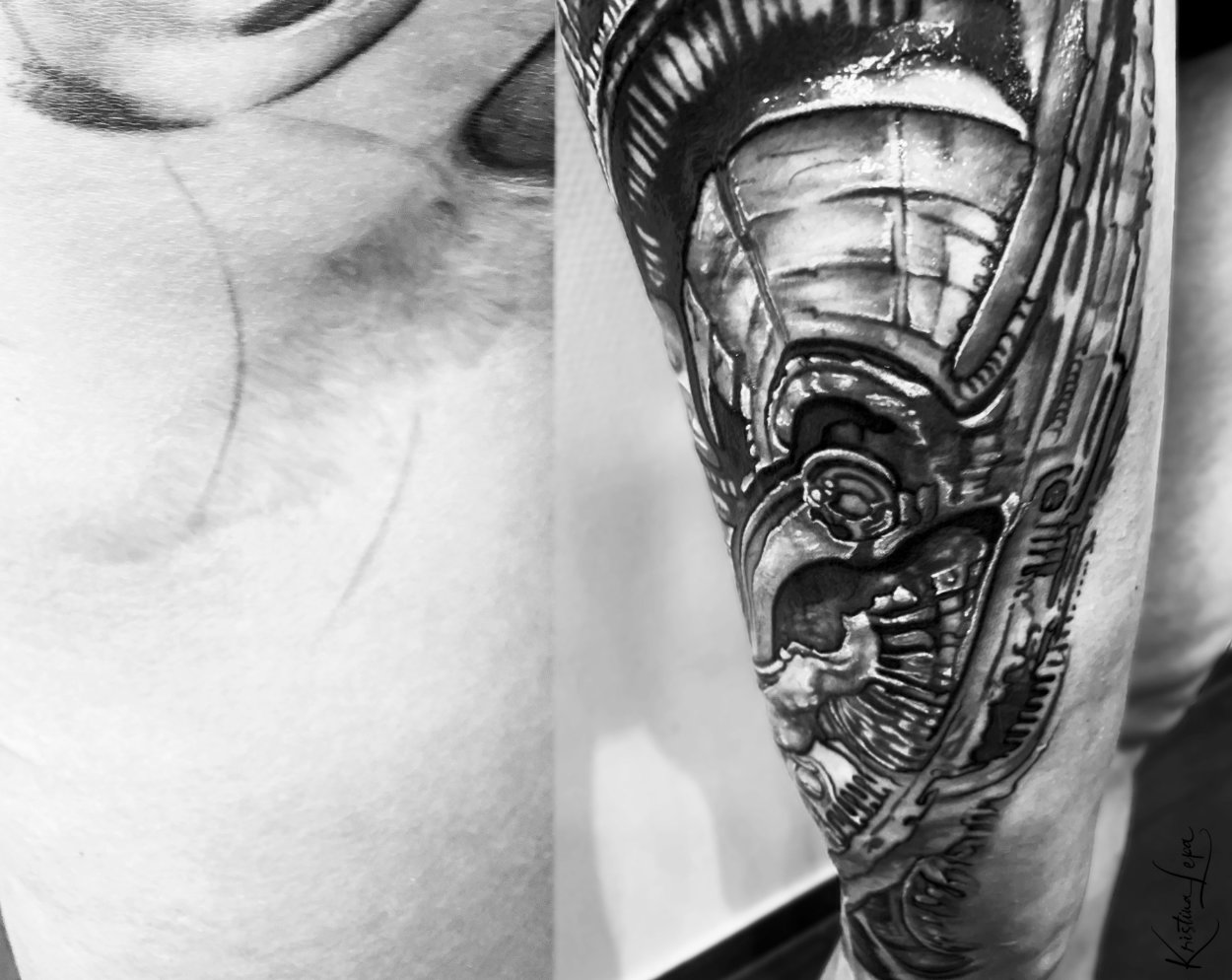
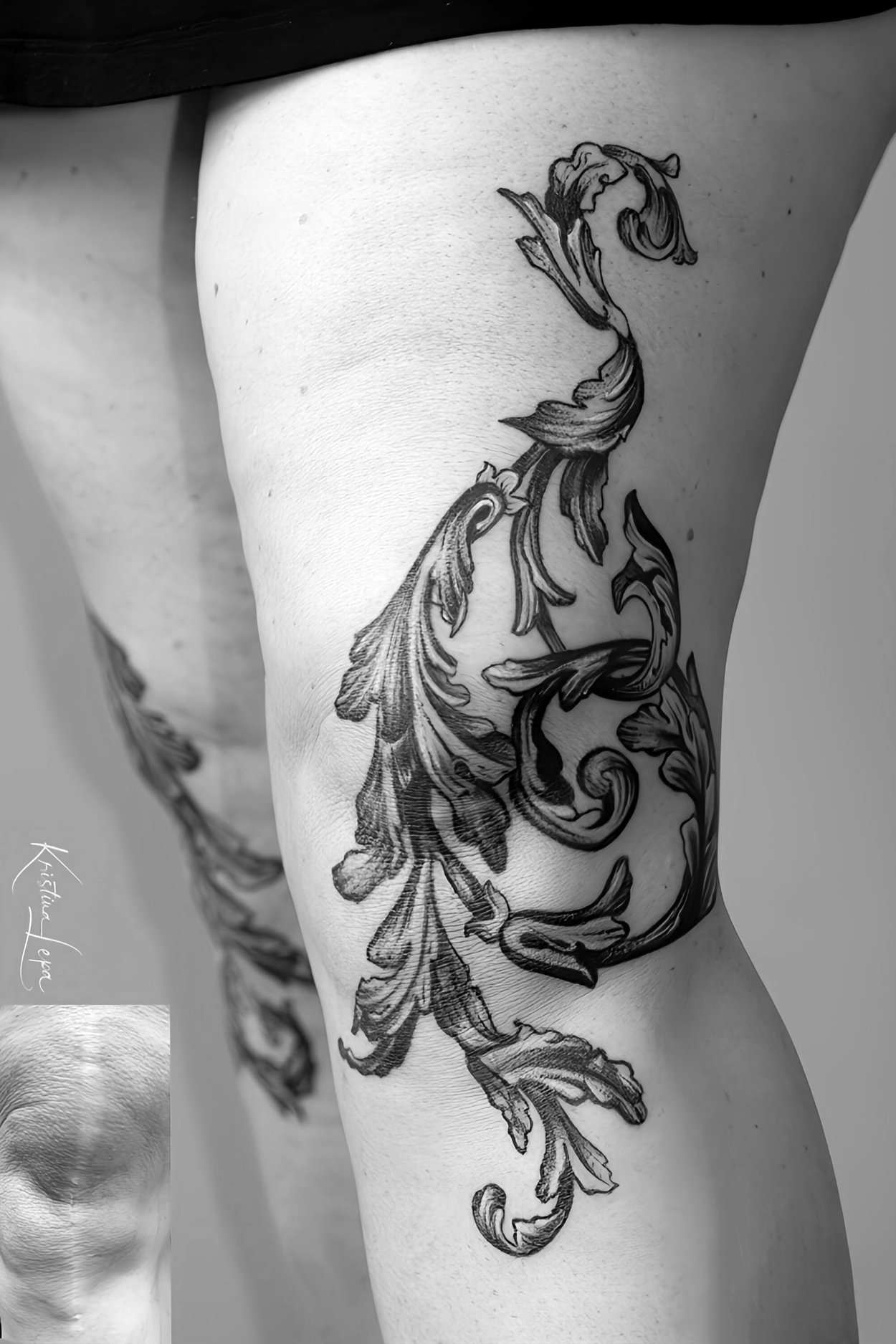
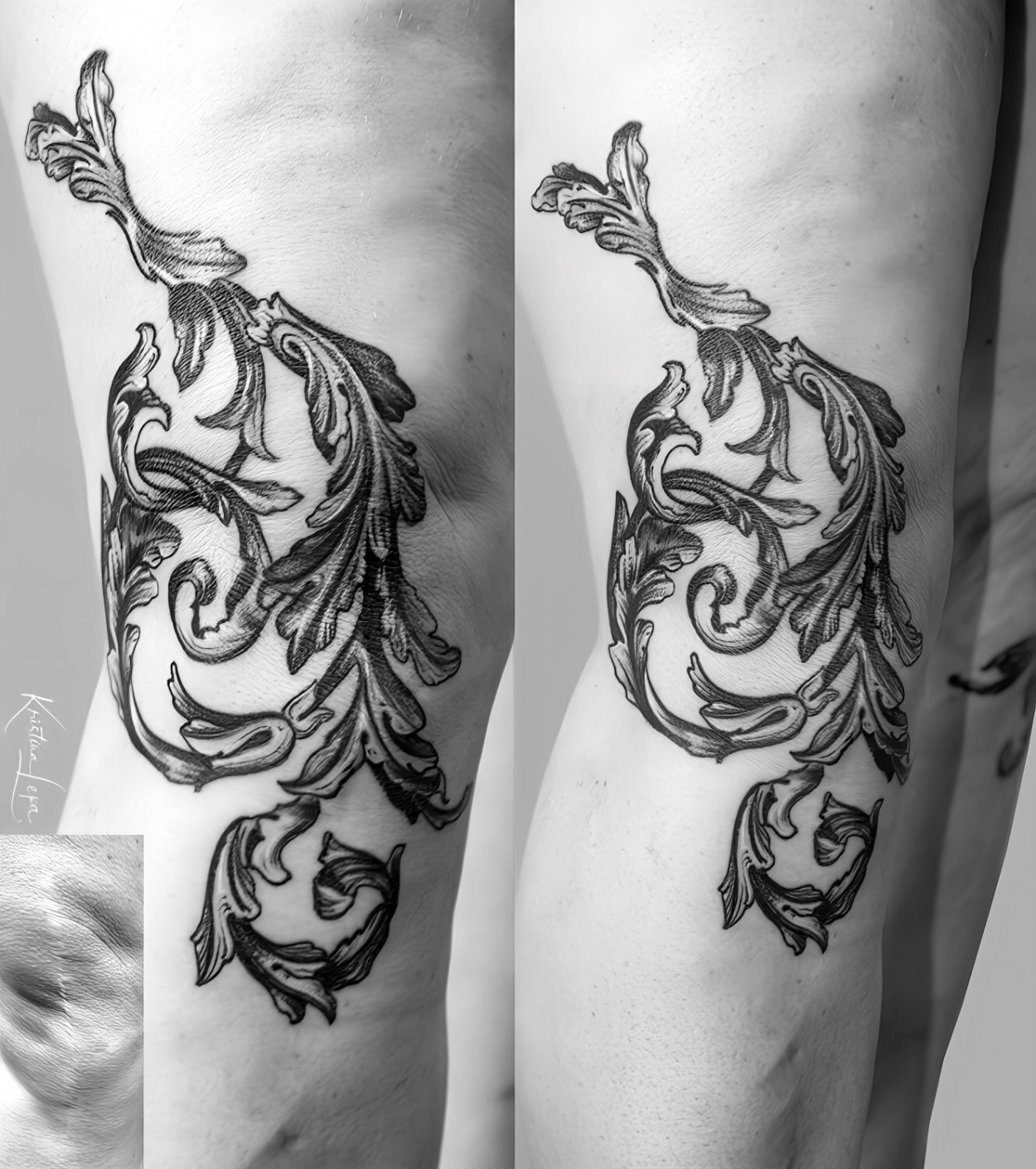
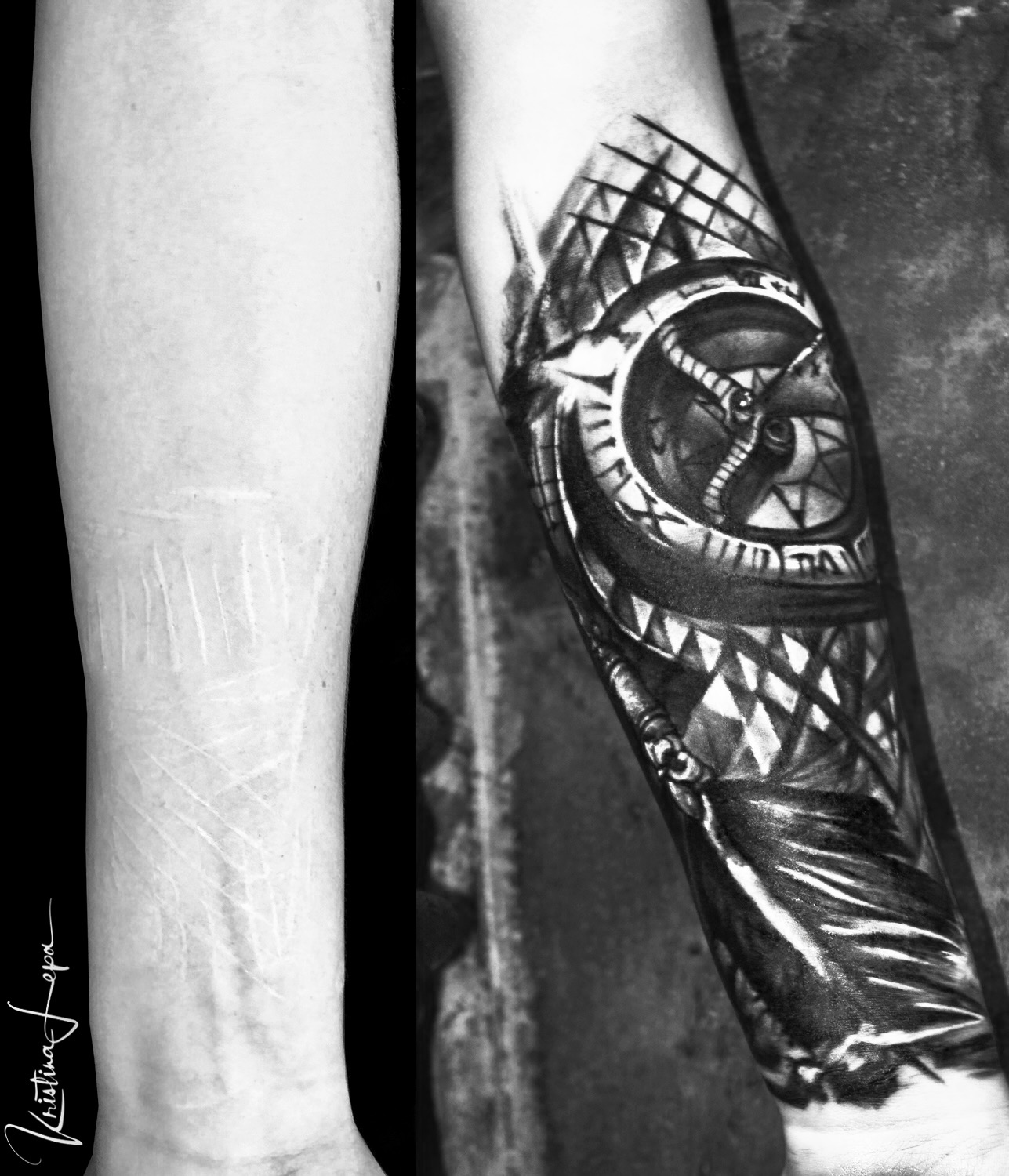
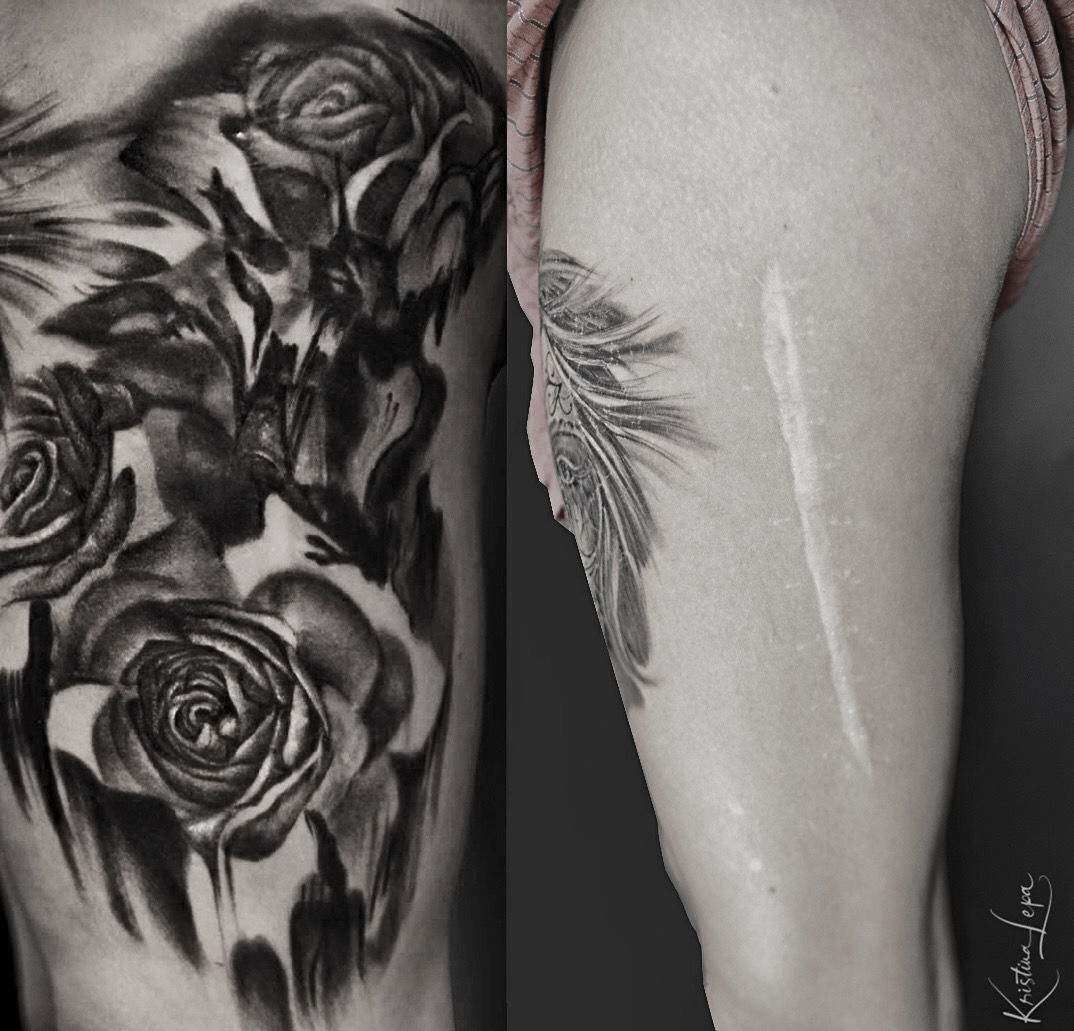
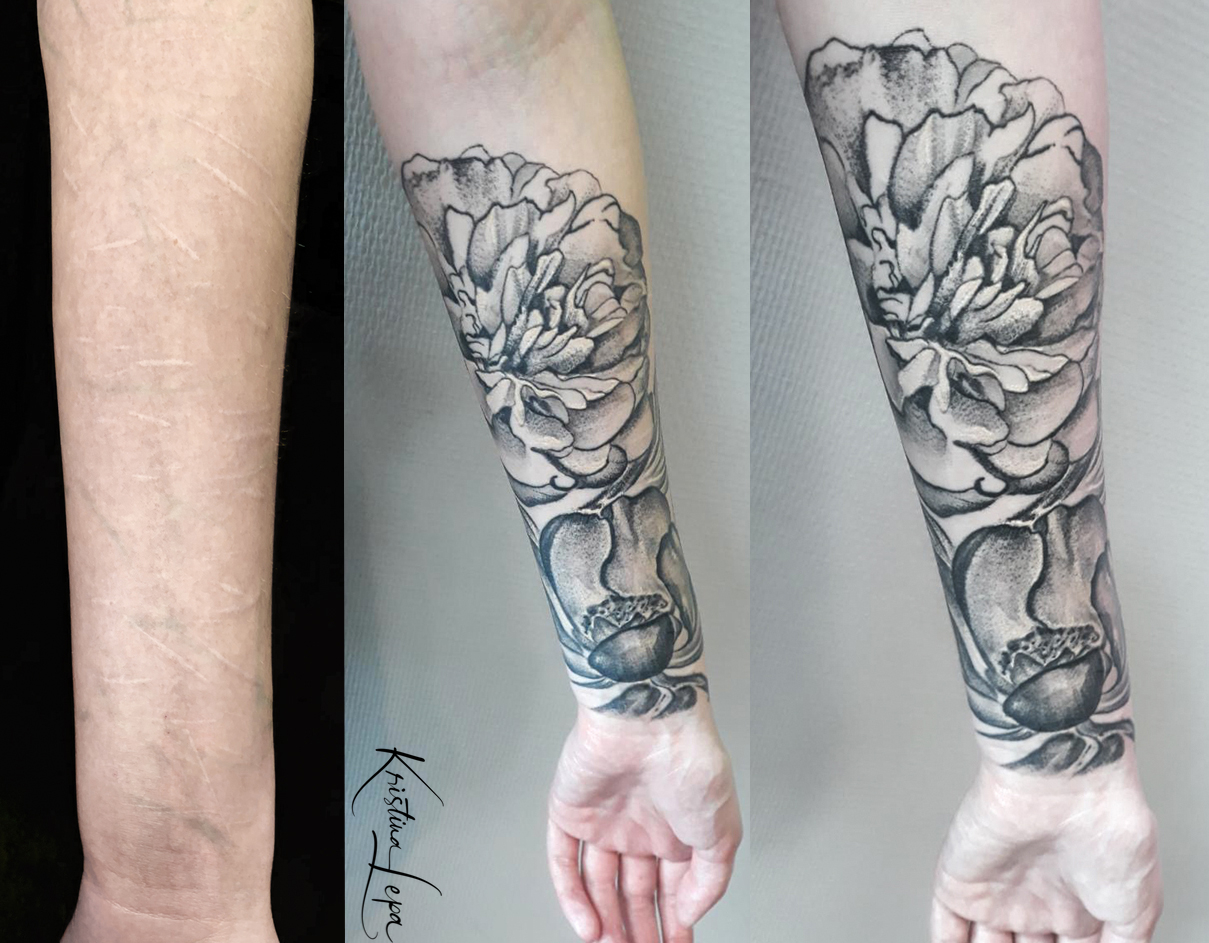
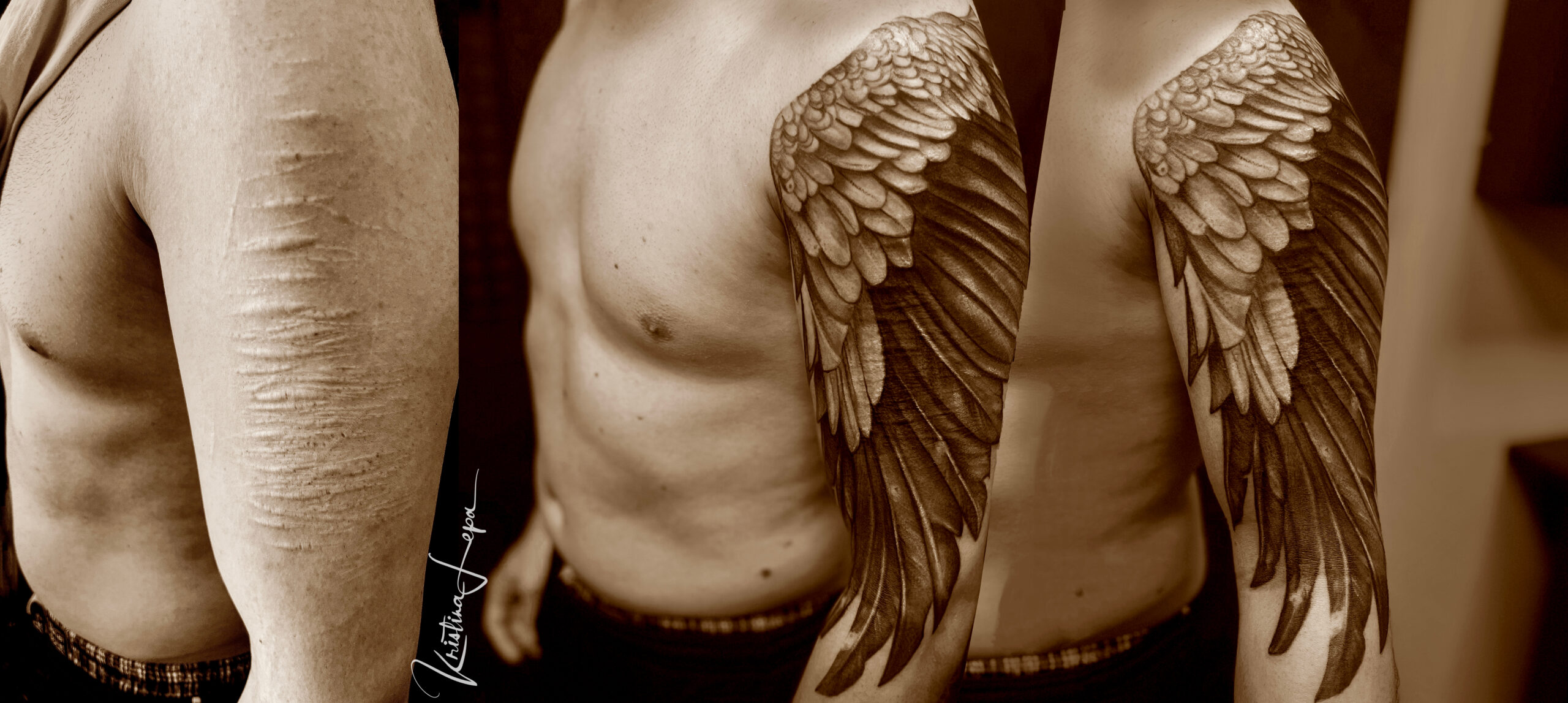
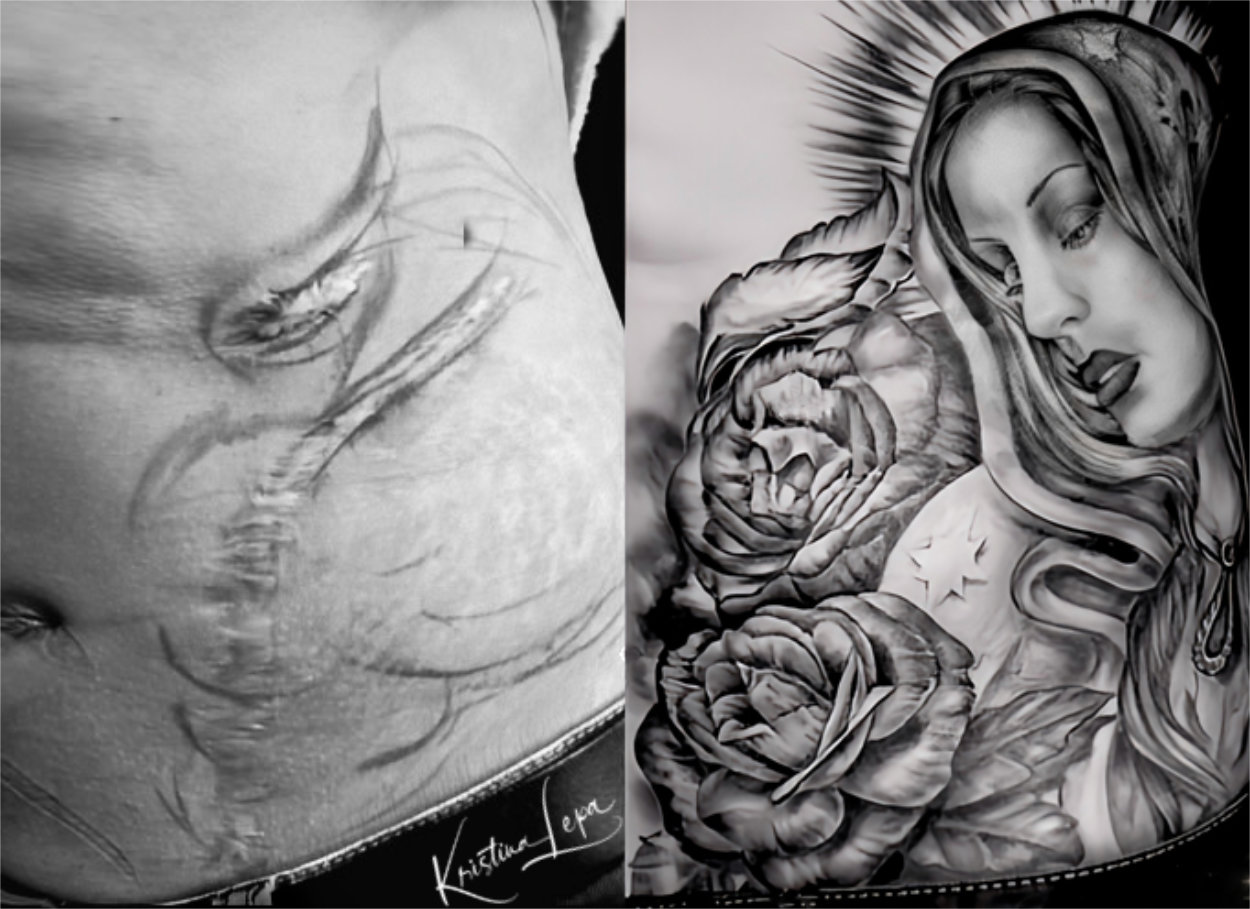
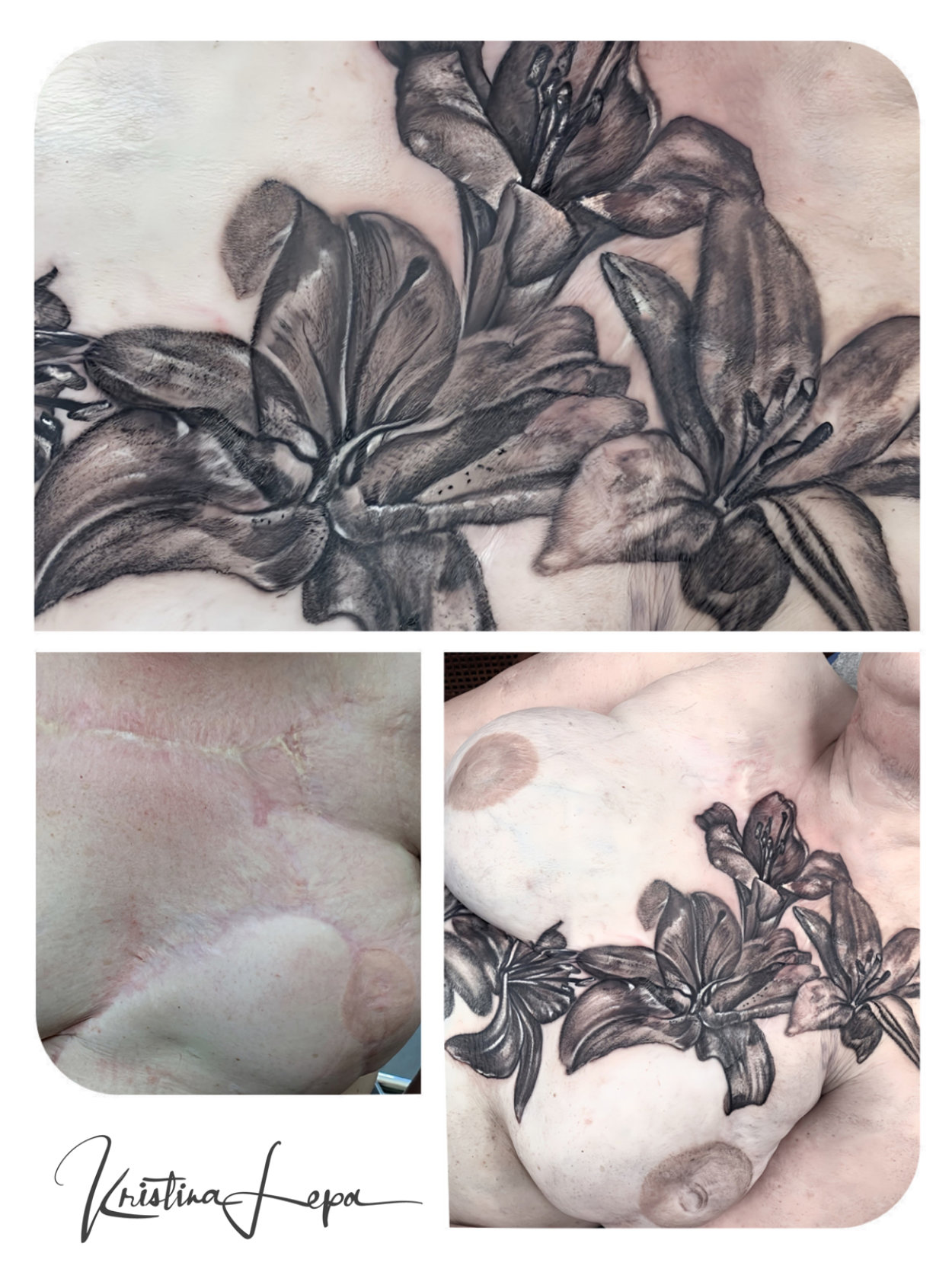
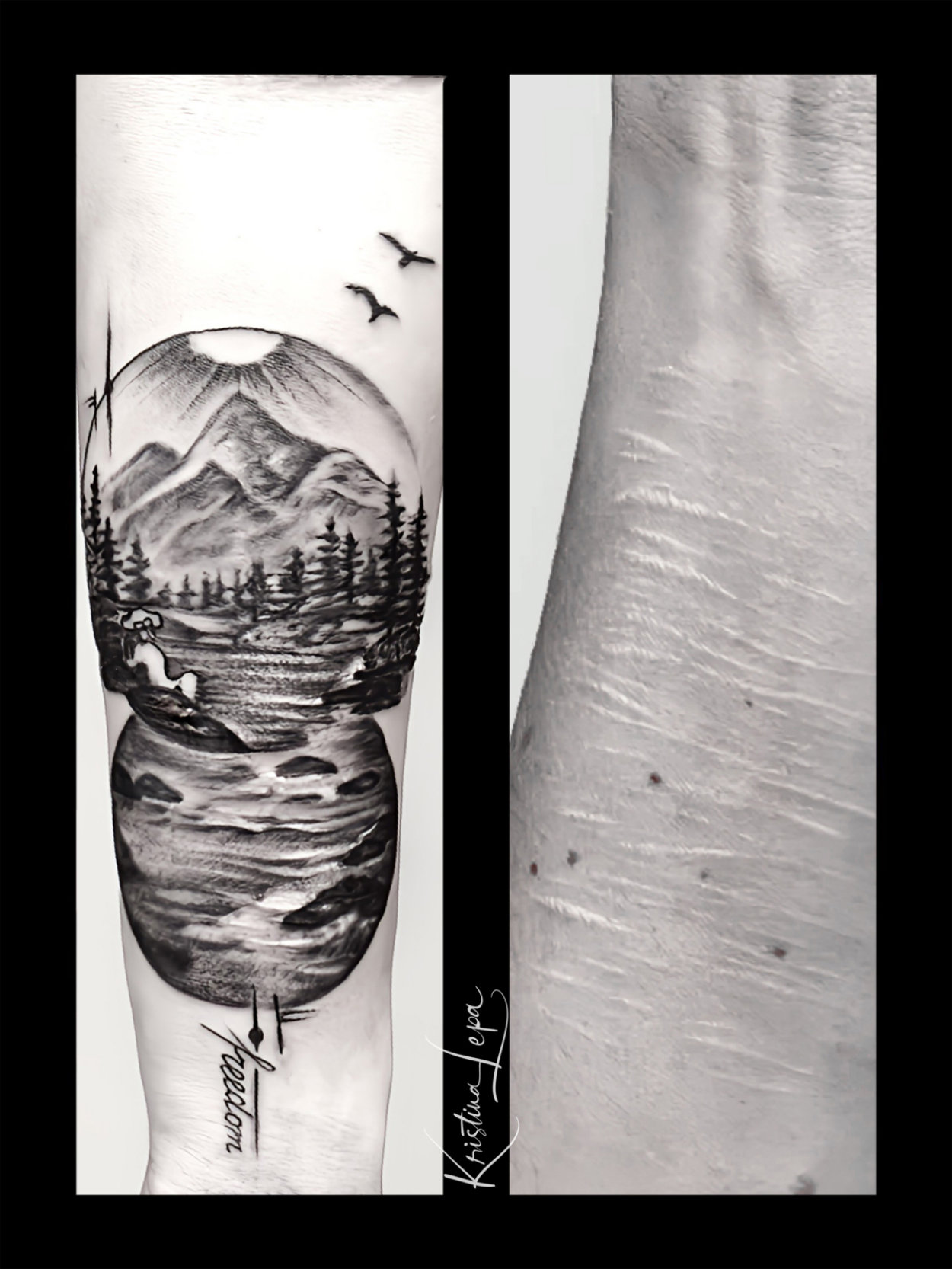
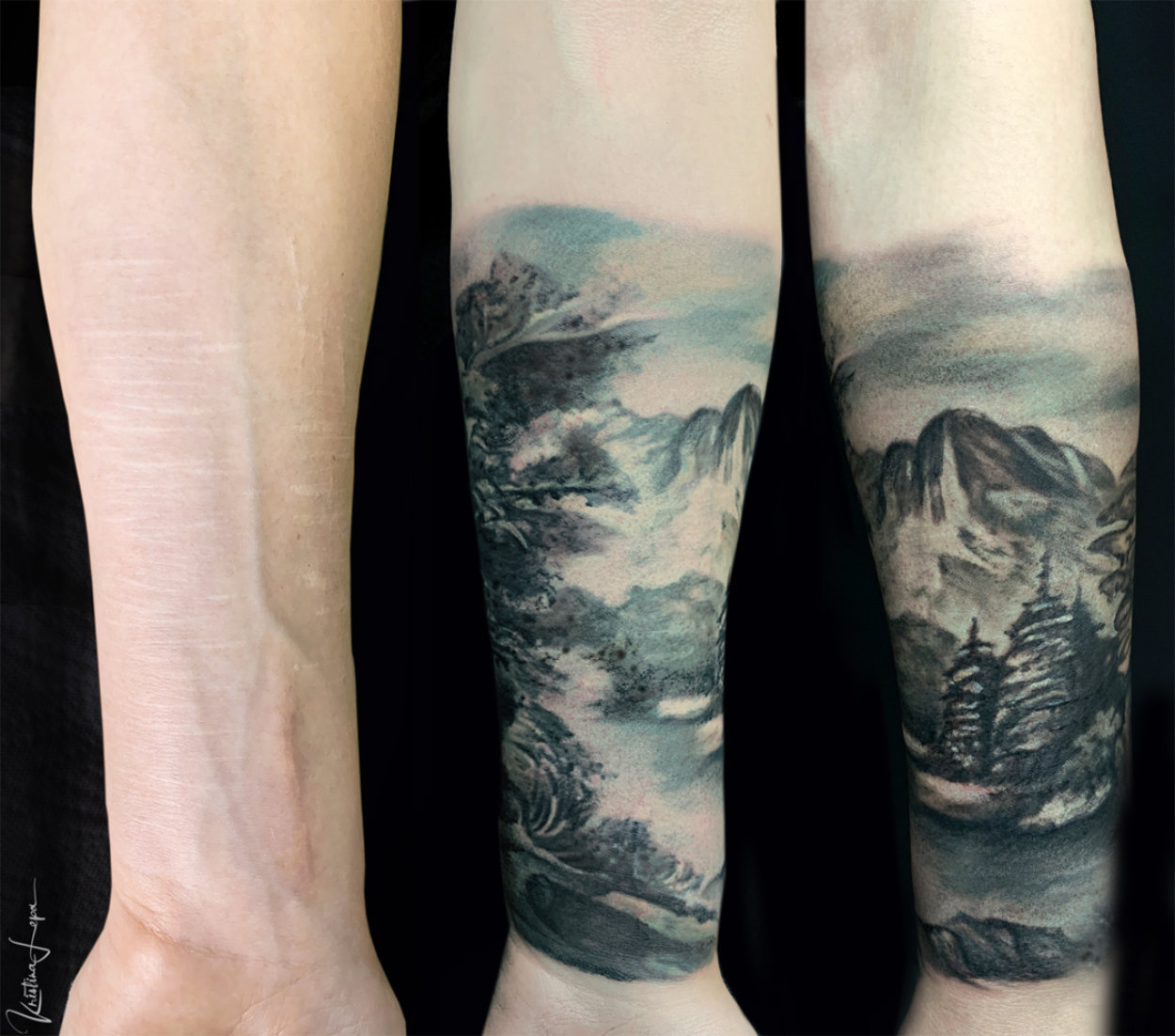
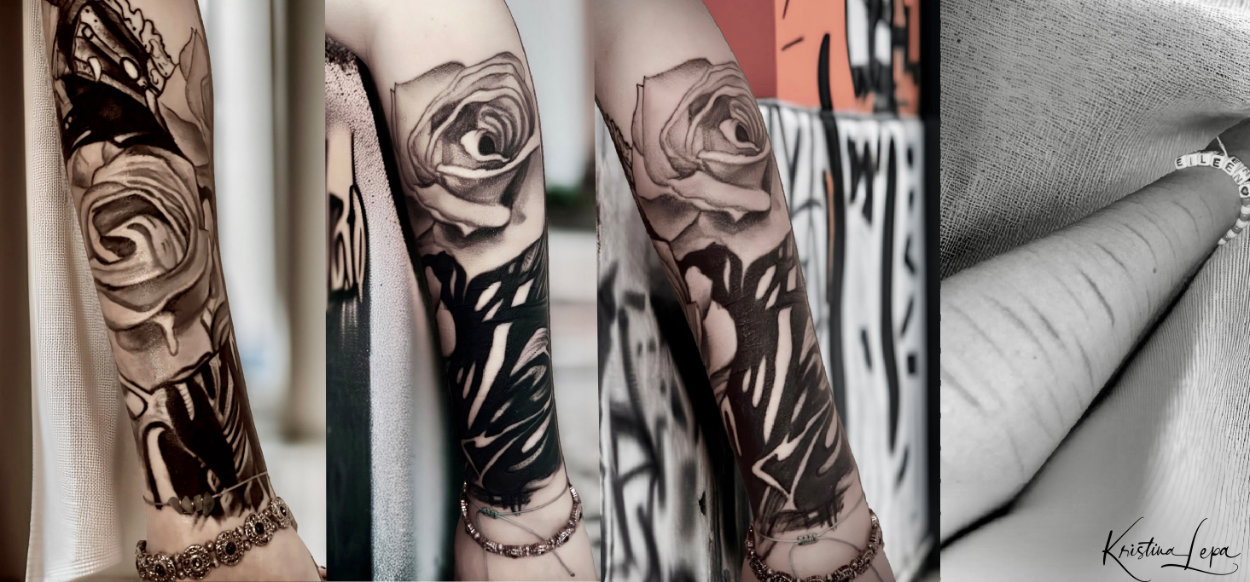
4.9 out of 5 stars · 127 reviews on Google (as of November 2026)
I searched for a really long time in the Bonn/Cologne area for the right artist for my scar cover-up tattoo and am so happy to have found Kristina Lepa at Las Vegas Tattoo Siegburg. Already at the consultation I knew I was in exactly the right place: honest, sensitive, professional and with an incredible eye for detail. Kristina did not simply cover my scar; she turned it into a beautiful, individual tattoo concept.
Having travelled from Düsseldorf, I quickly realised: in this field she is simply in a class of her own. … Kristina did not just look at my skin; she immediately made me feel completely understood and in good hands. … She understands scar tissue like hardly anyone else.
THE FIRST STEP
You can first discuss your starting point discreetly with Kristina Lepa. It is about possibilities, limits and a possible creative direction. Concrete tattoo planning only begins when the starting point is suitable and you consciously decide to go further.
No. The first contact needs no photos. The skin is looked at in a personal appointment. Health details belong in the conversation set aside for that before tattooing.
You decide what you want to share about your personal story. For a responsible assessment, the details relevant to the tattoo are discussed in confidence.
There is no blanket commitment based on age alone. What counts is fully healed, stable skin and the individual scar structure. Photos or an age are no substitute for the personal assessment.
Complete invisibility cannot be promised. The tattoo can visually integrate or cover scars; the structure of the scar tissue remains.
If you are travelling further, a first conversation by video call is possible by arrangement. The personal skin analysis on site remains necessary before any tattooing.
Whether a scar is suitable depends on its structure, stability and position, not on its cause. Surgical, accident and burn scars can be considered just as scars from self-harm can. Raised or still active scars call for particular caution; if in doubt we recommend a medical opinion beforehand.
The sensation is individual. Scar tissue can react more sensitively than uninjured skin, sometimes less. Pace and breaks are set by you.
Scar tissue takes ink differently from uninjured skin. It often does not take the ink completely the first time, so a touch-up is usually needed. Kristina Lepa plans for this from the start and discusses in advance what to expect during healing.
No. For the assessment it is the skin that counts, not the story. You decide what you want to tell.
That depends on the area and the scar structure and is named after the personal assessment.