Cinematic Dark Fusion Realism
Realism, dark art and cinematic depth in one composition built from the body.
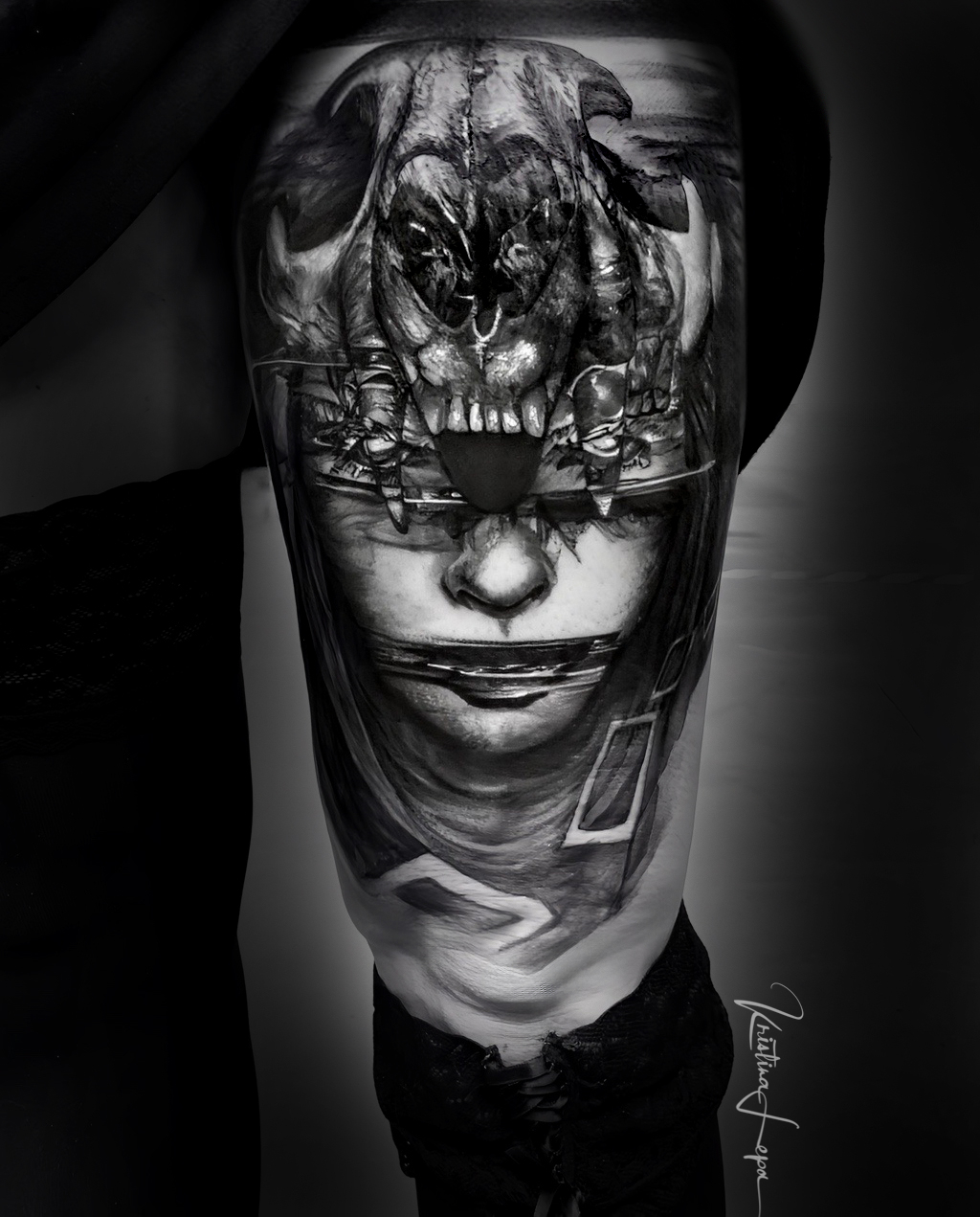
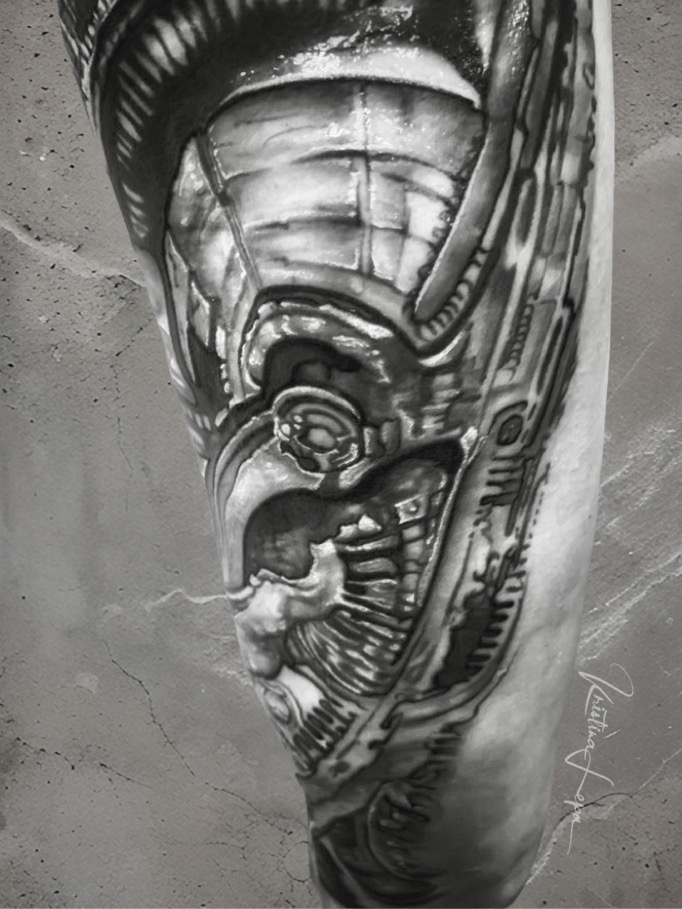
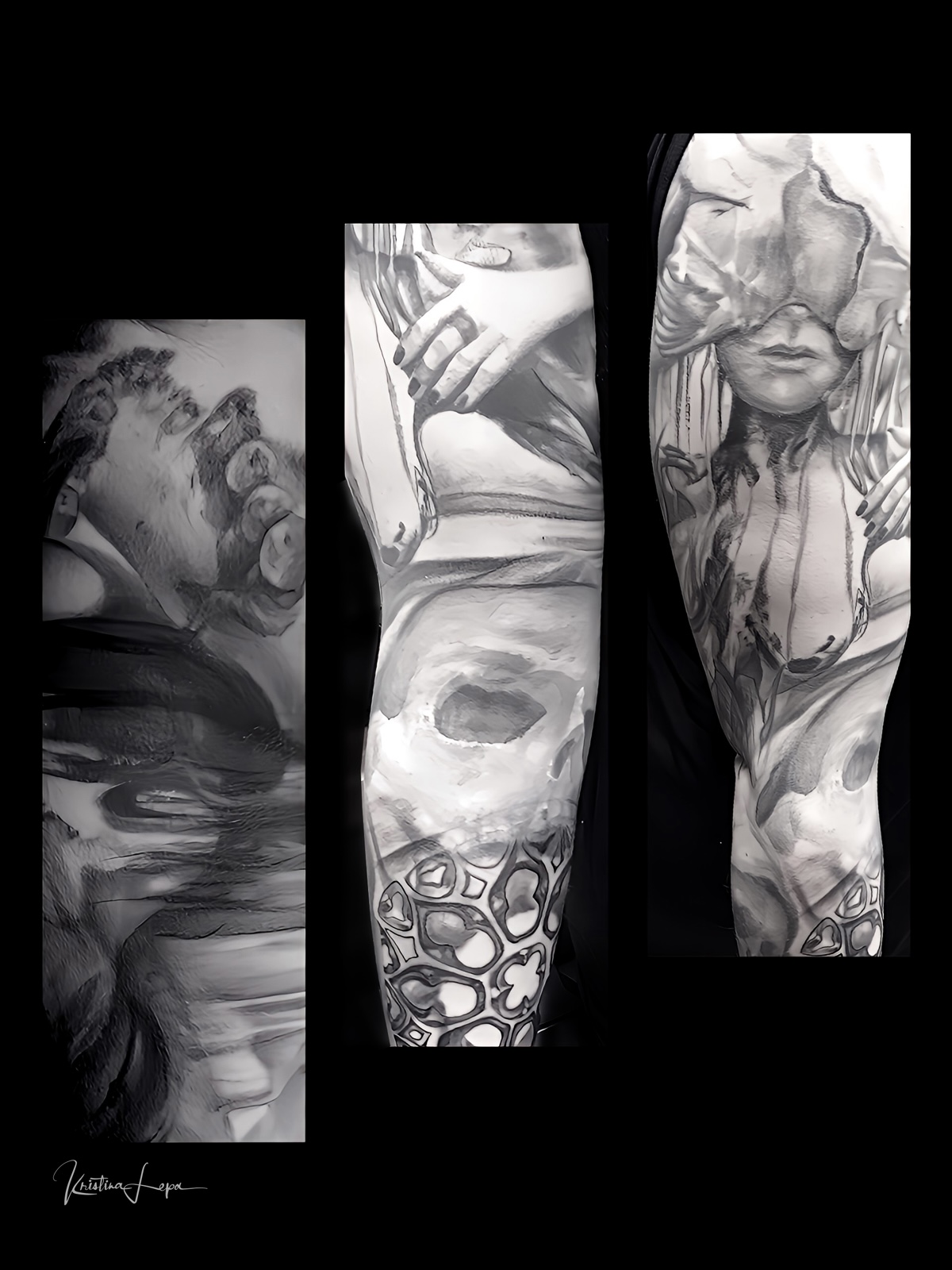
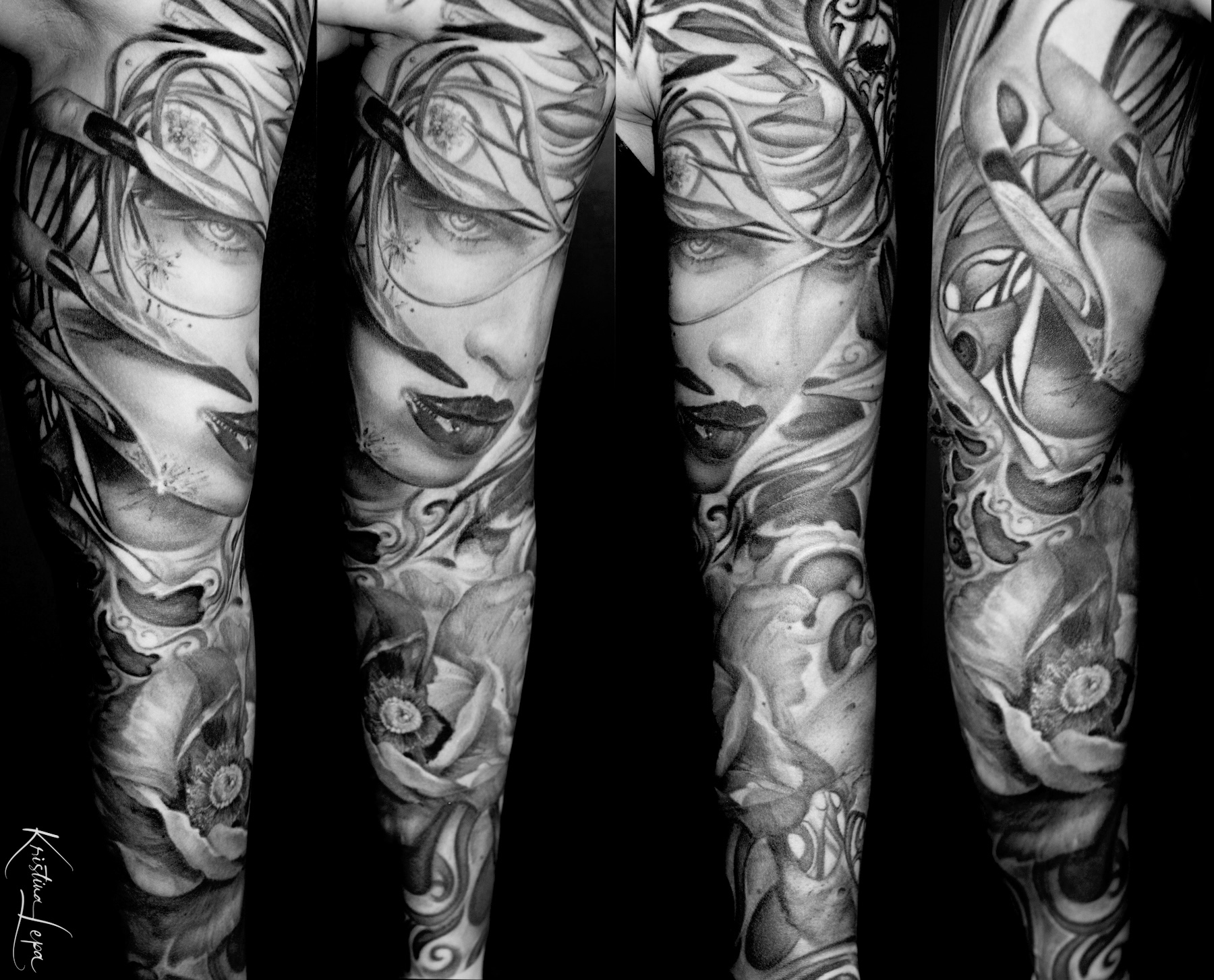
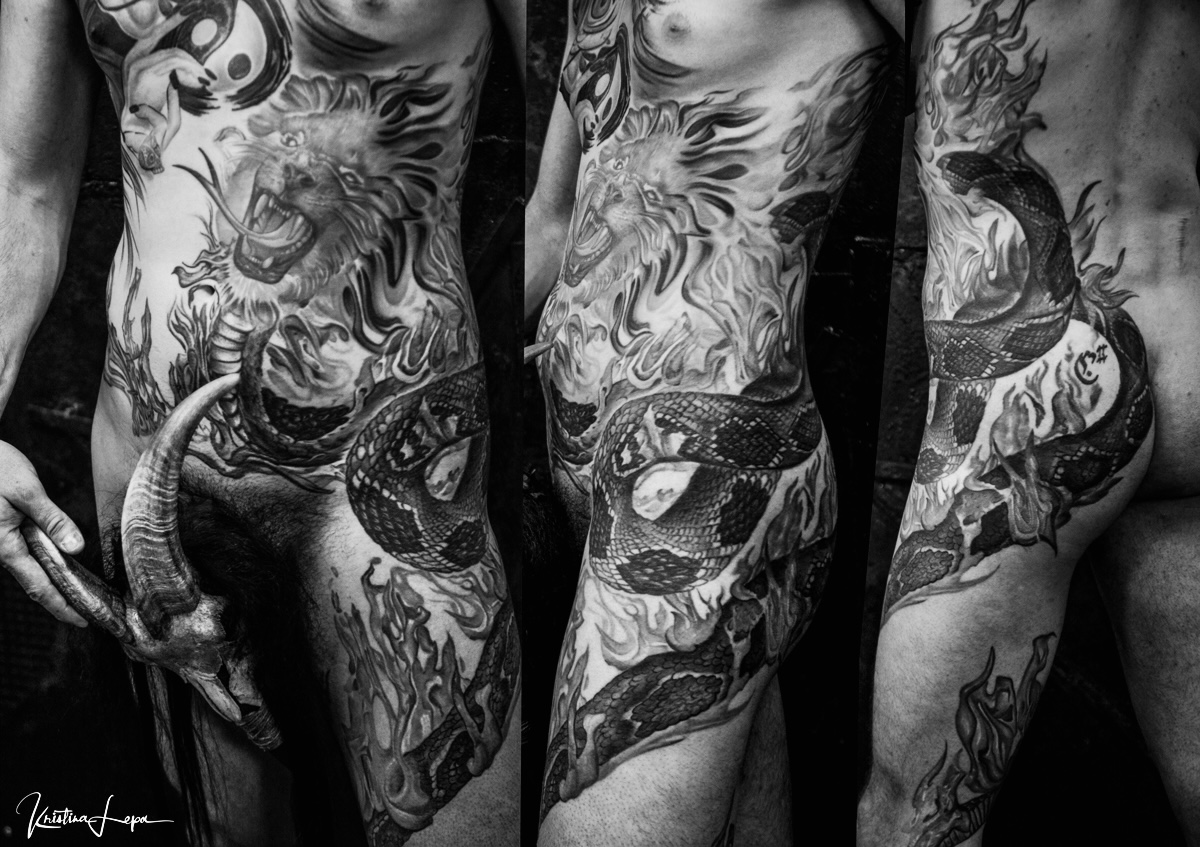
Cinematic Dark Fusion Realism is the concept developed by Kristina Lepa and the name of her own artistic signature. She is the founder of this style. It brings together black-and-grey realism, dark art, organic movement and graphic fragmentation.
Faces, anatomical forms and surreal elements flow into one another. Light sets the focus, shadow creates depth. Open skin and deliberate breaks give the composition its rhythm.
In brief
Cinematic Dark Fusion Realism is a tattoo style founded by the tattoo artist Kristina Lepa (Las Vegas Tattoo Siegburg, Germany). It combines black-and-grey realism, dark art and graphic fragmentation into a large-scale, cinematically lit composition that is developed freehand from the shape of the body.
- Founder
- Kristina Lepa, tattooing for more than 22 years
- Atelier
- Las Vegas Tattoo Siegburg, between Cologne and Bonn, Germany
- Foundation
- Black and grey realism
- Characteristics
- Cinematic light, fusion of several motifs, graphic fragmentation, open skin as a design element
- Method
- Freehand, developed from anatomy and movement
- Format
- Large scale: arm, leg, chest or back
- Especially suited to
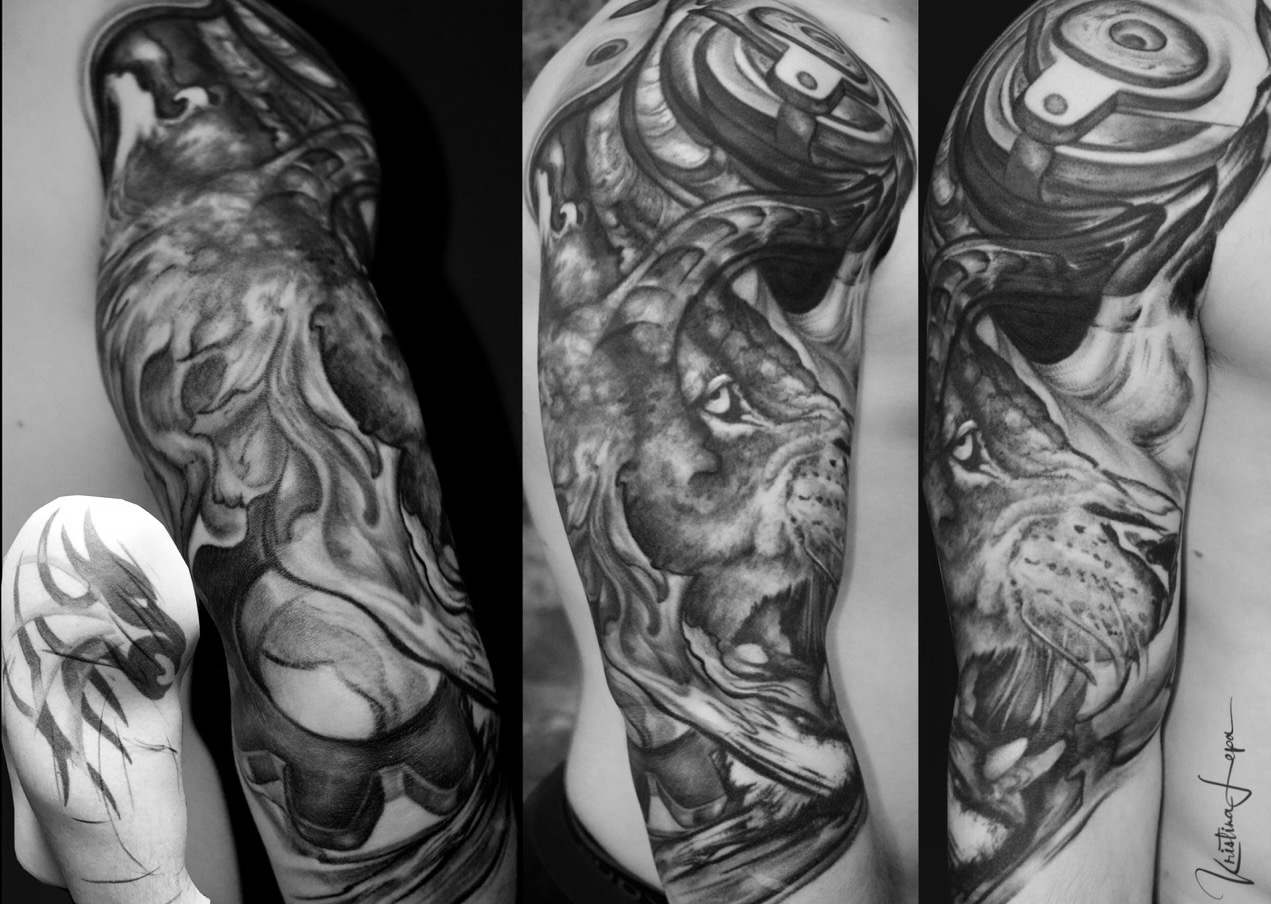
- Complex cover-ups and scar transformations
Developed from the body
The design is created freehand from the shape and movement of the body. Kristina leads motifs and transitions into one connected image: across an arm, the back or another part of the body. Details take their place from the overall composition, so the work holds from every angle.
What defines the style
- Cinematic light: one clear point of light leads the eye, deep shadow gives the image space.
- Fusion instead of a single motif: faces, anatomy and surreal elements merge into one connected image.
- Graphic fragmentation: deliberate breaks and open skin give the composition rhythm.
- Thought from the body: muscle flow and movement determine the structure. The layout is drawn freehand.
- Large format: the style unfolds on an arm, leg, chest or back, as a single piece or as part of a larger concept.
How it differs from classic realism
Classic realism reproduces a motif as accurately as possible. Cinematic Dark Fusion Realism goes one step further: the body becomes the picture space. Motifs are connected, broken and led by light until an independent scene emerges. The technical foundation remains precise black-and-grey realism.
Cover-ups and scars in this visual language
Dense shadow, flowing transitions and a freehand layout make the style a strong basis for complex cover-ups and scar transformations . What exists is not simply covered; it is worked into a new composition. What is possible in an individual case is clarified in person at the atelier in Siegburg. Clients travel from Cologne, Bonn, the rest of Germany and abroad.
Frequently asked questions
What is Cinematic Dark Fusion Realism?
Cinematic Dark Fusion Realism is the visual language developed by Kristina Lepa. It joins black-and-grey realism with dark art, organic movement and graphic fragmentation in a composition that grows out of the body and works with light and depth like a film scene.
Who developed Cinematic Dark Fusion Realism?
The concept and the name come from Kristina Lepa, founder and artistic director of Las Vegas Tattoo in Siegburg, Germany. She has been tattooing for more than 22 years.
How is it different from classic realism?
Classic realism reproduces a motif as accurately as possible. Cinematic Dark Fusion Realism treats the body as the picture space: motifs merge, are deliberately broken and are led by light, shadow and open skin into one overall composition.
Is the style suitable for cover-ups and scars?
Often, yes. Dense shading, flowing transitions and a freehand layout make it possible to work existing tattoos or healed scars into a new composition. Whether this is possible in an individual case is decided in a personal assessment at the atelier.
Do I need a finished design?
No. What matters is the meaning, the direction and the placement. Kristina Lepa develops the composition freehand on the body.
I am travelling from abroad. How does it work?
A first conversation can take place by video call, so direction and scope are clear before you travel. The skin itself is assessed in person at the atelier. Siegburg/Bonn is a high-speed rail stop between Cologne and Frankfurt; the nearest airport is Cologne Bonn.
From idea to work.
In conversation we clarify whether your project and this visual language fit together. We look at placement, scale and existing tattoos. You do not need a finished design. What matters is the meaning, the direction and the openness to give Kristina Lepa creative room within the limits you agree together. With Cinematic Dark Fusion Realism in particular, this trust is what allows body shape, movement, light and motif to become one composition.
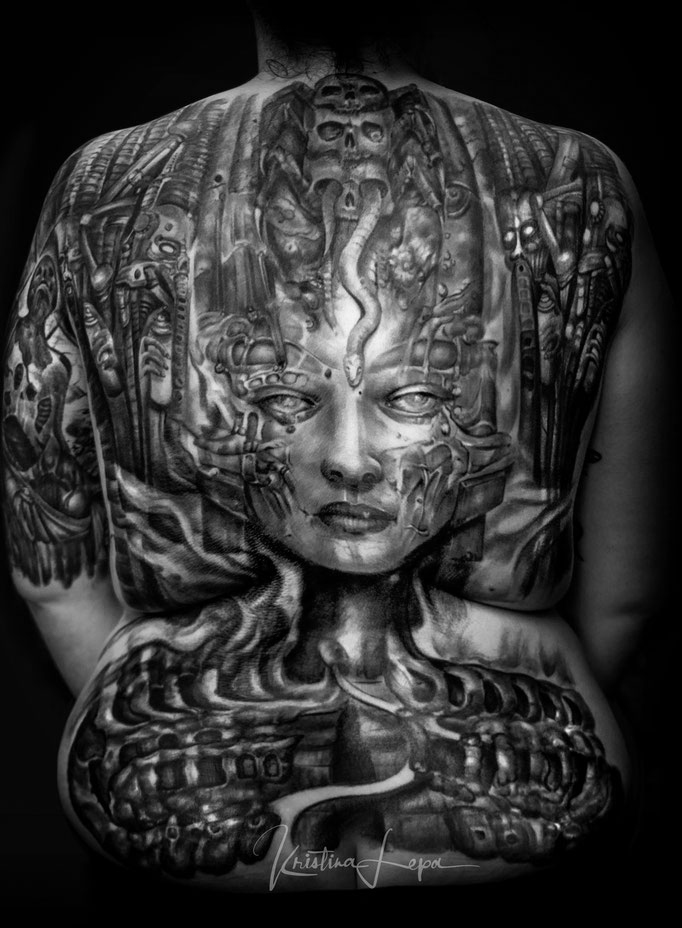
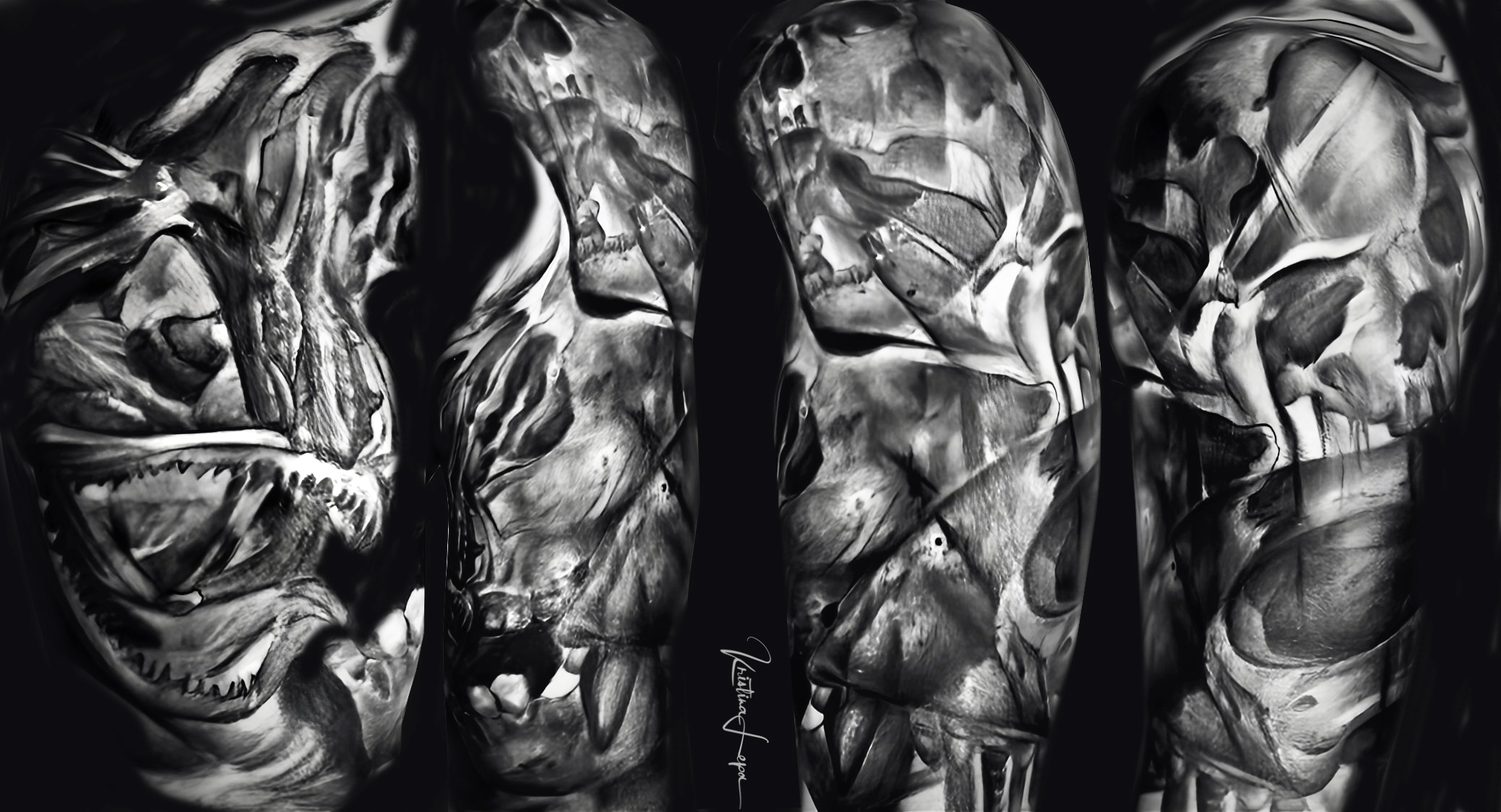
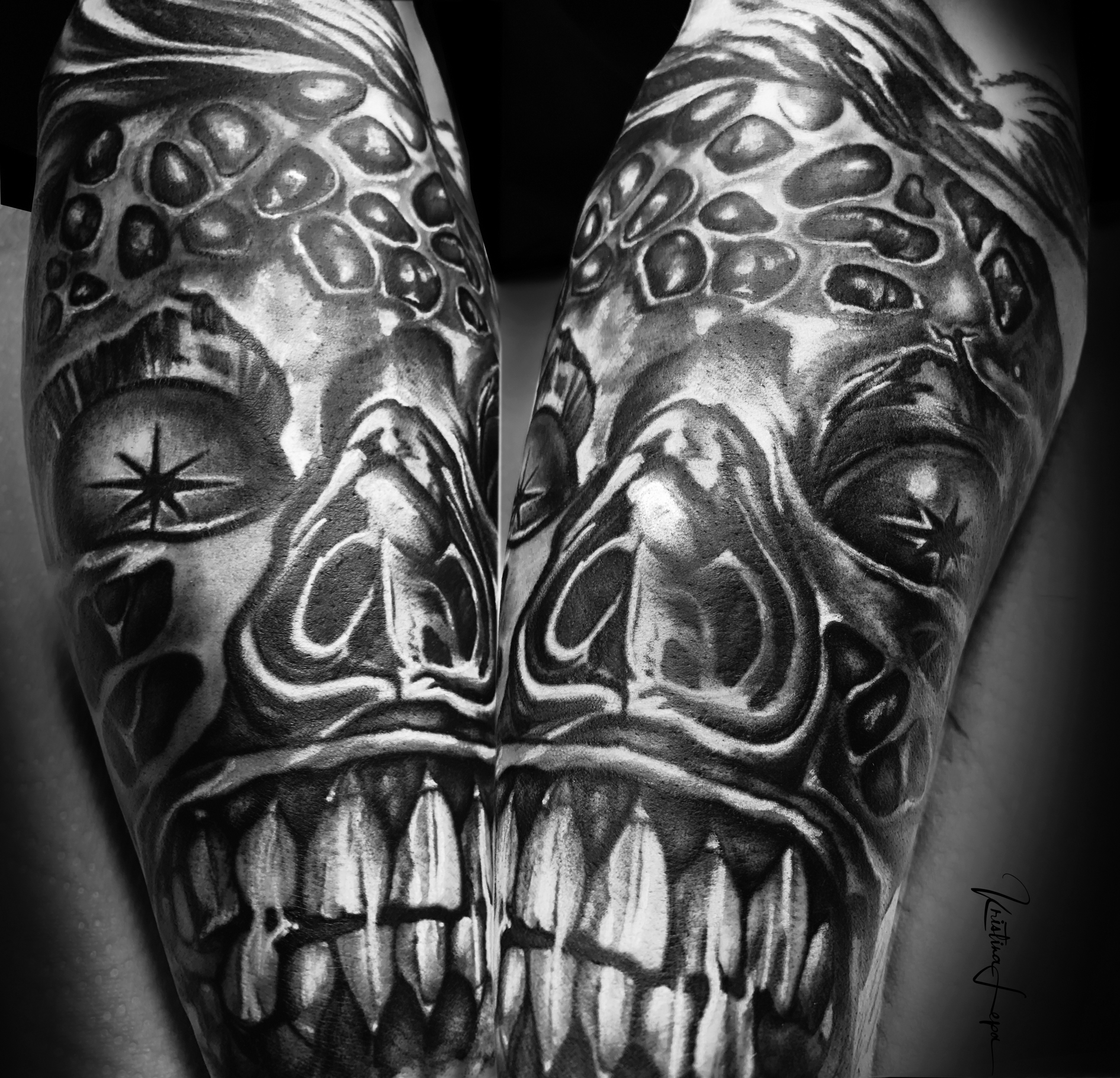
Selected works
Select an image to enlarge it.

Personal consultation
Working together requires mutual trust and openness to the artistic development. When that foundation is right, we plan the realisation.